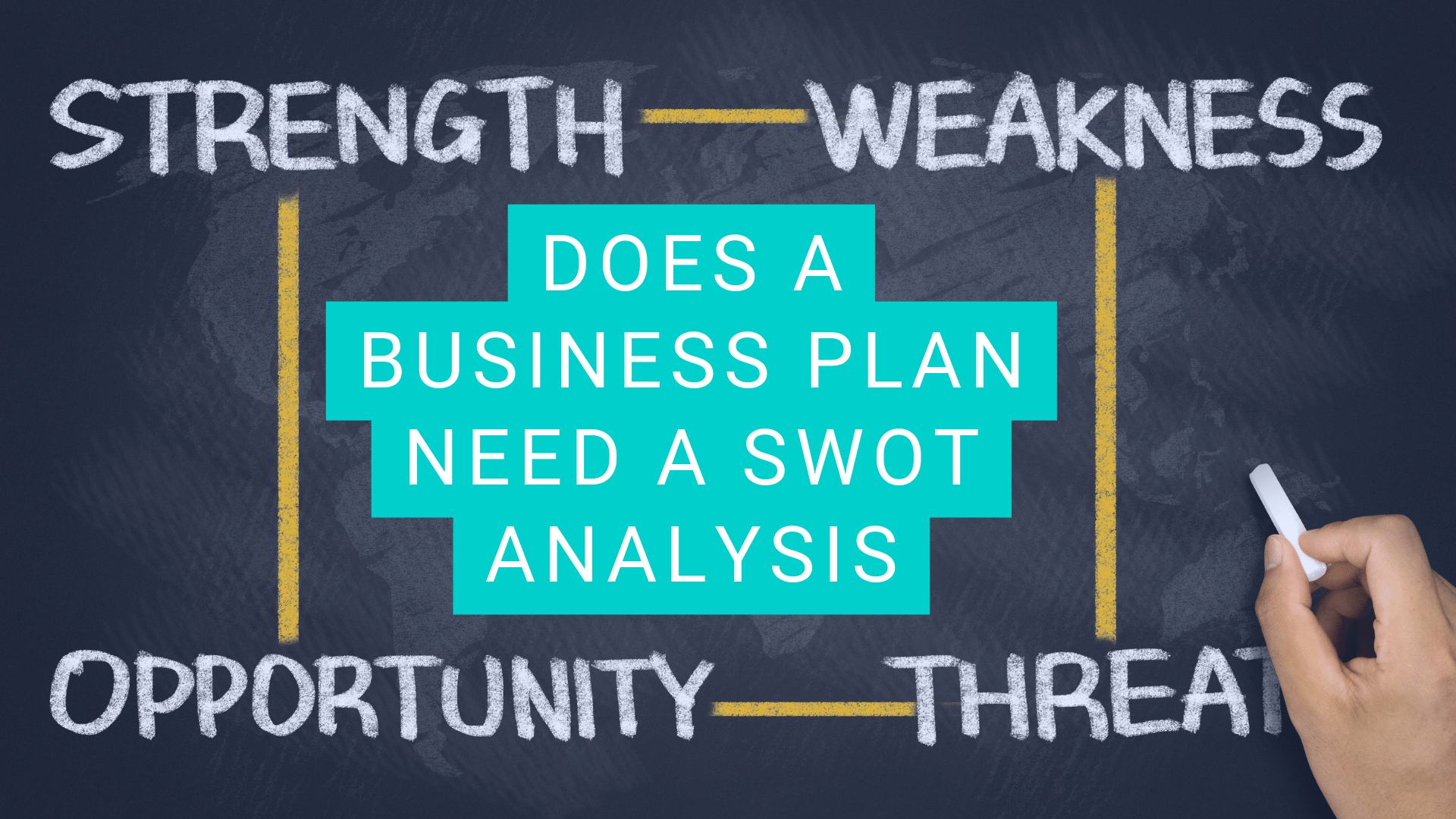
A business plan is a formal document that outlines the goals and objectives of a business. It also provides a roadmap for how the company will achieve those goals. While a SWOT analysis is not required in a business plan, it can help identify potential opportunities and threats that may impact the business’s success and therefore define your business’s financial viability.
What is a SWOT analysis for a Business Plan?
A SWOT analysis is a business planning tool that helps identify the Strengths, Weaknesses, Opportunities and Threats facing a company. A SWOT analysis helps businesses identify areas where they can improve and also recognise potential threats. This information can be used to make strategic decisions about the direction of the company.
It also identifies the strengths of the business, which will show you and potential investors where you can excel versus the competition and also how you can be more resilient to any threats that come your way.
Why Do A SWOT analysis?
By identifying internal and external factors within a SWOT analysis, entrepreneurs can develop a more comprehensive understanding of their business. This knowledge can then be used to create a plan that includes specific goals and objectives.
Strengths and weaknesses are internal factors that entrepreneurs should be aware of. These include things like the company’s financial stability, management team, or competitive advantages.
On the other hand, opportunities and threats are external factors that could impact the business negatively or positively. Examples of these include changes in technology or the economy.
SWOT analysis is used in all business areas, and whilst not a necessary addition to your business plan, it can help you answer some critical questions about your business.
How to do a SWOT analysis for your business
A SWOT analysis consists of four areas:
Strengths: This is what you do well. It’s your competitive advantage.
Weaknesses: These are the areas of your business that need improvement.
Opportunities: These are external factors that could help your business grow.
**Threats: **These are external forces that could damage your business.
When conducting a SWOT analysis, businesses should ask themselves questions in each area to generate ideas and identify potential issues. For example, in strengths, a business owner might ask themselves “What does our company do better than any other company?” In the weaknesses quadrant, a business owner might ask, “What areas of our business need improvement?”.
Once you have identified the key points in each area, you can use this information to develop strategies to help your business achieve its goals. For example, if your company is weak in marketing, you might develop a marketing plan that includes specific goals and objectives. Or, if there is an opportunity to enter a new market, you could create a strategy for how your business will take advantage of that opportunity.
By considering all of these areas in your business plan, you are showing that you are taking a balanced view of your business. All too often, it is easy to list out many strengths without even considering why your business might fail.
A SWOT analysis is just one tool entrepreneurs can use to assess their businesses. However, it’s important to remember that no single tool can provide the complete picture of your business plan.
Some Questions to Consider in your SWOT analysis
In order to get you thinking about some things to add to your SWOT analysis, we have listed some example questions that may fit your business model.
Strengths
What does our company do better than any other company?
What are our unique selling points?
What are our core competencies?
What do our customers say we do well?
Weaknesses-
What problems do we face every day?
What are we not good at?
What do our customers say we need to improve?
What do our competitors have that we don’t?
Opportunities-
What external factors could help our business grow?
What new markets should we enter?
What new products or services can we offer?
What partnerships or alliances can we form?
Threats-
What external forces could damage our business?
What is the competition doing?
What are the economic conditions like?
Are there any new technologies that could disrupt our industry?
An example of a SWOT Analysis
Strengths****Weaknesses-Product is unique and fills a gap in the market -Strong marketing team -An experienced management team-High cost of goods sold -Inexperienced sales team -Lack of brand recognitionOpportunities****Threats-Expanding into new markets -Developing new products -Forming partnerships with other businesses-Competition from larger businesses -Changes in consumer trends -Economic recession
Alternatives to a SWOT Analysis
There are a few alternatives to SWOT analysis that business owners can use to assess their businesses. These include:
PESTEL Analysis– This is similar to a SWOT analysis but includes additional factors like political, environmental, social, and legal factors. This is more of a macro view of the organisation and helps find specific issues within the business.
Core Competency Analysis– This focuses on a company’s core competencies and how they can be used to achieve competitive advantage.
Value Chain Analysis- This assesses the different parts of a company’s value chain in order to identify areas where improvements can be made.
SOAR Analysis- This is a more positive approach to business planning that focuses on Strengths, Opportunities, Aspirations, and Results. It looks at Aspirations and Results instead of Threats and Weaknesses, and this is often seen as a more positive approach as it looks at what the company wants to achieve going forward.
Summary
Whilst a SWOT analysis is not absolutely necessary in a business plan, it is a good starting place to help in your development of the business plan.
A SWOT analysis is relatively simple to complete, but it can be effective in helping you have a pragmatic approach and therefore consider areas that may create risk.
Investors will want to know that you have thought about any weaknesses and threats to your business as it shows that you are not blind to any risks, and that means they are more likely to invest in your business.